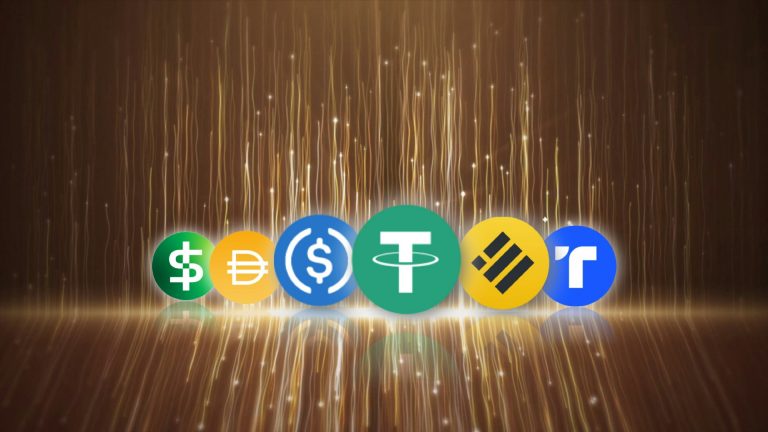
Entering the American Regulatory Fold Tether is officially making a play for the tightly regulated American market. On Tuesday, the crypto giant announced the launch of USAT, a dollar-backed stablecoin expressly built to operate under the new federal stablecoin framework established by the GENIUS Act. Issued by Anchorage Digital—which nabbed the first U.S. national bank charter for a crypto firm back in 2021—USAT is positioned to bring stablecoin issuance into the bedrock of American financial infrastructure under the watchful eye of the OCC.
Right out of the gate, USAT is starting small. Its initial market cap sits at a modest $20 million, practically a rounding error compared to the staggering $186 billion circulating supply of Tether’s flagship token, USDT. Still, that footprint is expected to climb fast. Several major digital asset exchanges, including Crypto.com, Kraken, OKX, Bybit, and fintech platform Moonpay, have already lined up to list the token alongside Tether’s sister company, Bitfinex.
Wall Street heavyweight Cantor Fitzgerald will serve as the preferred primary dealer and hold custody of the fiat reserves backing the new coin. Cantor already claims to custody the $100 billion-plus in U.S. Treasury bills backing USDT, and it holds a convertible bond believed to represent a 5% stake in Tether. Given that Cantor founder Howard Lutnick currently sits as U.S. Commerce Secretary and former White House crypto advisor Bo Hines is ostensibly steering USAT, institutional players might actually be willing to give the new stablecoin a serious look.
Taking Aim at Domestic Competitors Tether clearly wants USAT to become the go-to settlement mechanism for American institutions, promising that banking partners are actively being lined up to integrate the token across the financial ecosystem. Assuming Congress finally gets moving on broader digital asset market structure legislation, USAT is also primed for use in U.S.-approved decentralized finance (DeFi) applications.
That puts Tether on a direct collision course with Circle, whose USDC token currently dominates the DeFi stablecoin space. The rivalry is hardly a secret. Last October, Tether CEO Paolo Ardoino took a not-so-subtle shot at Circle, declaring that USAT would “hit the ground running and start taking away market share from our competitors that were the ones that tried to kill us in the first place.” Yet, if Circle investors are sweating the new competition, they certainly aren’t showing it on the market. Circle’s share price dipped a negligible 1.3% by Tuesday’s close.
Bridging the Gap in the Middle East While USAT targets the West, Tether is simultaneously pouring capital into the Middle East to bridge the gap between traditional finance and blockchain. On Monday, the company led an $8 million strategic funding round for KAIO, an Abu Dhabi-regulated tokenization firm. The raise, which also drew participation from Systemic Ventures, Further Ventures, Laser Digital, and Brevan Howard Digital, pushes KAIO’s total funding to $19 million.
KAIO builds infrastructure that lets wealth managers distribute institutional funds onchain. By bundling products from heavy hitters like BlackRock, Hamilton Lane, and Brevan Howard, KAIO significantly lowers the barrier to entry, allowing eligible users to invest with as little as $100. Armed with the new capital, the firm plans to expand into credit, ETFs, and structured products. They are also preparing to launch an onchain fund in partnership with Mubadala Capital, the massive Emirati private equity firm boasting $385 billion in assets under management.
For Tether, the investment is a calculated move to funnel its massive stablecoin liquidity into regulated investment vehicles. Ardoino noted that KAIO’s platform “unlocks new avenues for capital formation” by making institutional assets broadly accessible onchain. The system is built with compliance baked in, supporting regulated distribution frameworks across Abu Dhabi, Singapore, and the Cayman Islands.
The Lingering Shadow of Illicit Finance The dual strategy is obvious: Tether wants USAT to capture the heavily regulated U.S. market and ventures like KAIO to legitimize onchain finance, leaving USDT to maintain its dominance in emerging economies. But executing that pivot means grappling with USDT’s deeply entrenched reputation as a favored tool for the criminal underworld.
USAT was originally slated for a December rollout. While Tether offered no explanation for the delay, the company was likely making absolutely sure its regulatory paperwork was flawless. Historically, Tether has simply retreated from strict jurisdictions, making this compliant U.S. push a major departure from their usual playbook.
The dark reality of USDT’s misuse was highlighted yet again on Tuesday when a Chinese national was handed a 46-month U.S. prison sentence for laundering nearly $37 million in “pig butchering” scam proceeds. The stolen cash was funneled from American bank accounts to Deltec Bank in the Bahamas—the former stomping grounds of ex-Tether banker John Ray—where it was converted into USDT and shipped to scam centers in Cambodia.
Furthermore, the flagship token remains a proven vehicle for dodging U.S. economic sanctions. Last week, blockchain analytics firm Elliptic revealed that Iran’s central bank had scooped up at least $507 million in USDT over the past year to prop up the rial and bypass American financial rails. Adding to the scrutiny, TRM Labs’ 2026 Crypto Crime Report detailed how Iran’s Revolutionary Guard Corps utilized two sham exchanges to move $1 billion over the last two years, almost entirely via USDT on the TRON network. Whether U.S. authorities have pressured Tether to freeze these Iranian-linked funds remains an open question.
About the Author